

Introduction
Travel in 2026 is no longer just about getting from one place to another. It is about navigating a highly connected, fast-moving global travel environment where prices change frequently, information is spread across many platforms, and decisions made before departure can shape the entire journey.
This is where smart travel tips become essential for every modern traveler.
While travel has become easier in many ways, it has also become more complex. Flight prices fluctuate, accommodation choices can be overwhelming, payment systems vary between countries, and important travel information may be scattered across airline, government, hotel and destination websites.
Without a clear strategy, even experienced travelers can overspend, waste valuable time or miss opportunities to make their journeys smoother.
A well-informed approach helps you make better decisions before departure, during the journey and once you arrive.
This guide brings together 25 smart travel tips designed to help you travel more efficiently, manage your money more carefully, prepare more effectively and make better decisions wherever your journey takes you.
For international trips, always verify current entry, passport, visa and health requirements before departure because rules can change.
Planning & Booking Strategy
1. Book Flights within the Smart Window
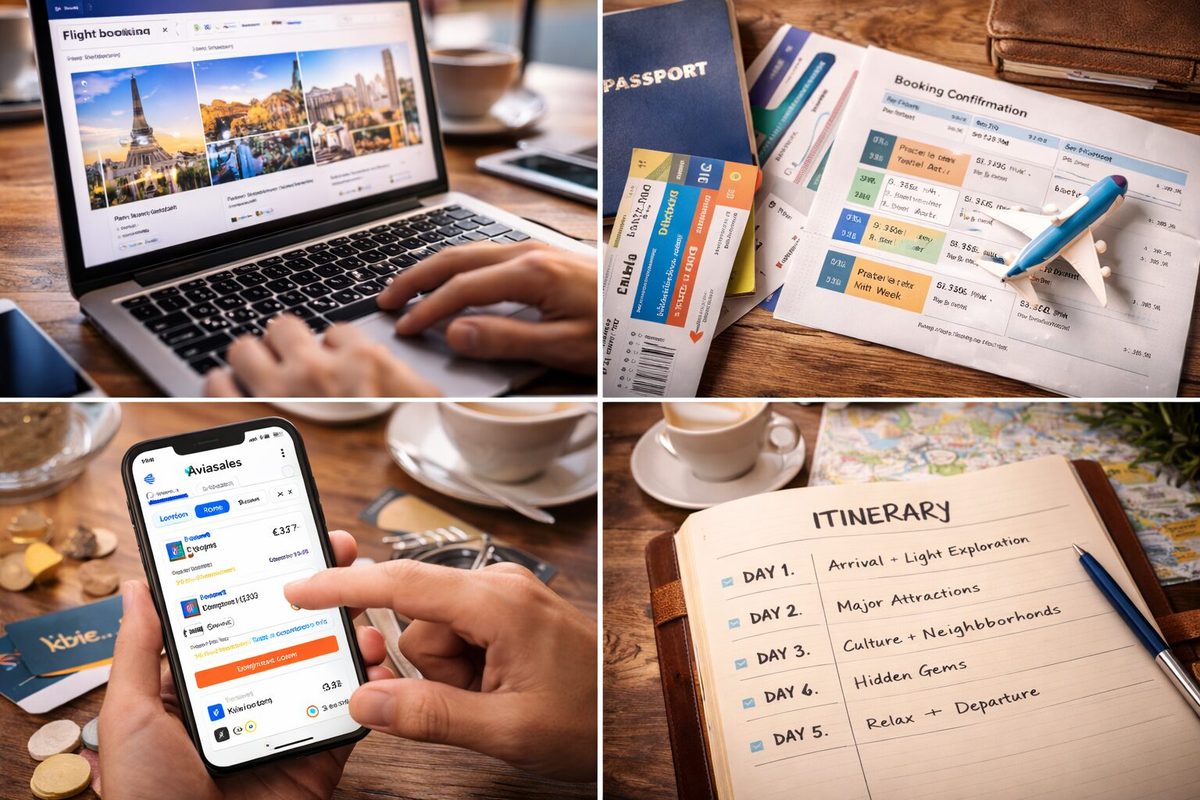
Smart flight planning means comparing fares, travel dates and booking conditions rather than assuming that the earliest or latest booking will always be cheapest.
One of the most common travel mistakes is assuming that booking as early as possible automatically guarantees the lowest fare.
In reality, there is no single booking window that works for every route, airline or season. Airfares respond to demand, availability, competition, seasonality and other factors.
Instead of relying on a fixed rule, monitor the route you intend to travel and compare fares over time. Tools such as Google Flights can help you observe price changes and compare different travel dates.
For international journeys, also consider the total travel experience. A slightly cheaper ticket may involve a much longer connection, inconvenient arrival time or restrictive baggage conditions.
A smart booking decision considers:
- Total fare
- Flight times
- Number and length of connections
- Baggage allowance
- Change and cancellation conditions
- Arrival and departure times
- Airport location
The goal is not simply to find the lowest number on the screen. It is to find a fare that provides good overall value for the journey you are actually planning.
2. Never Rely on a Single Booking Platform
Comparing more than one booking source can reveal different fares, routes, conditions and booking options for the same journey.
The same flight may appear differently across airlines, travel agencies and comparison platforms.
Different providers may have different airline relationships, promotional offers, payment options or bundled products. This is why experienced travelers compare before committing.
Common flight-booking options include:
You can also use comparison tools such as Google Flights or Skyscanner to see how different airlines and itineraries compare.
When comparing offers, do not look only at the headline price.
Check:
- Baggage
- Seat selection
- Connection times
- Ticket flexibility
- Payment conditions
- Refund or change restrictions
- Whether the booking is made directly with the airline or through an intermediary
Think of booking platforms as different markets. Comparing options before committing can help you identify the combination of price, convenience and flexibility that best suits your trip.
3. Flexibility is Your Greatest Money-Saving Tool
Flexible travel dates, airports and schedules can open up better-value options that fixed plans may overlook.
One of the most effective ways to reduce travel costs is to remain flexible where possible.
Changing your departure or return date by a day can sometimes produce a meaningful difference in airfare. The same principle can apply to accommodation, airport choice and even destination selection.
If your schedule allows, compare:
- Different departure dates
- Different return dates
- Nearby airports
- Alternative flight times
- Shoulder-season travel
- Different lengths of stay
Flexibility does not mean abandoning your plans. It means allowing your plans to adapt when a better-value option appears.
Among practical smart travel tips, this is one of the easiest habits to adopt because it can reduce costs without necessarily reducing comfort.
4. Consider Mid-Week Travel When It Fits Your Plans
Traveling on less busy weekdays can sometimes provide better fares, availability and a more relaxed experience.
Tuesday and Wednesday travel can be cheaper on some routes, but this is not a universal rule. Prices vary according to destination, season, airline schedules and demand.
Rather than assuming a particular weekday is always cheapest, compare several departure and return combinations.
Mid-week travel can also provide other advantages:
- Potentially lower demand
- More choice of flights
- Easier availability at some hotels
- Less congestion at certain attractions
- More flexibility for travelers who can avoid peak periods
The smartest approach is to compare rather than assume.
5. Leverage Price Alerts as Strategic Tools
Price alerts turn changing fares into information you can use when deciding when to book.
Instead of repeatedly checking the same flight manually, set up alerts where available and monitor how fares change over time.
Tools such as Google Flights can notify you when prices move for selected routes.
A useful process is:
- Identify your preferred route.
- Check several possible dates.
- Set a price alert.
- Observe the fare pattern.
- Compare the current price with realistic alternatives.
- Book when the overall value makes sense.
Price alerts should support your decision, not replace it. A lower fare is not necessarily a better choice if it comes with inconvenient schedules, restrictive conditions or excessive connections.
Money & Budget Intelligence
6. Always Build a Financial Buffer
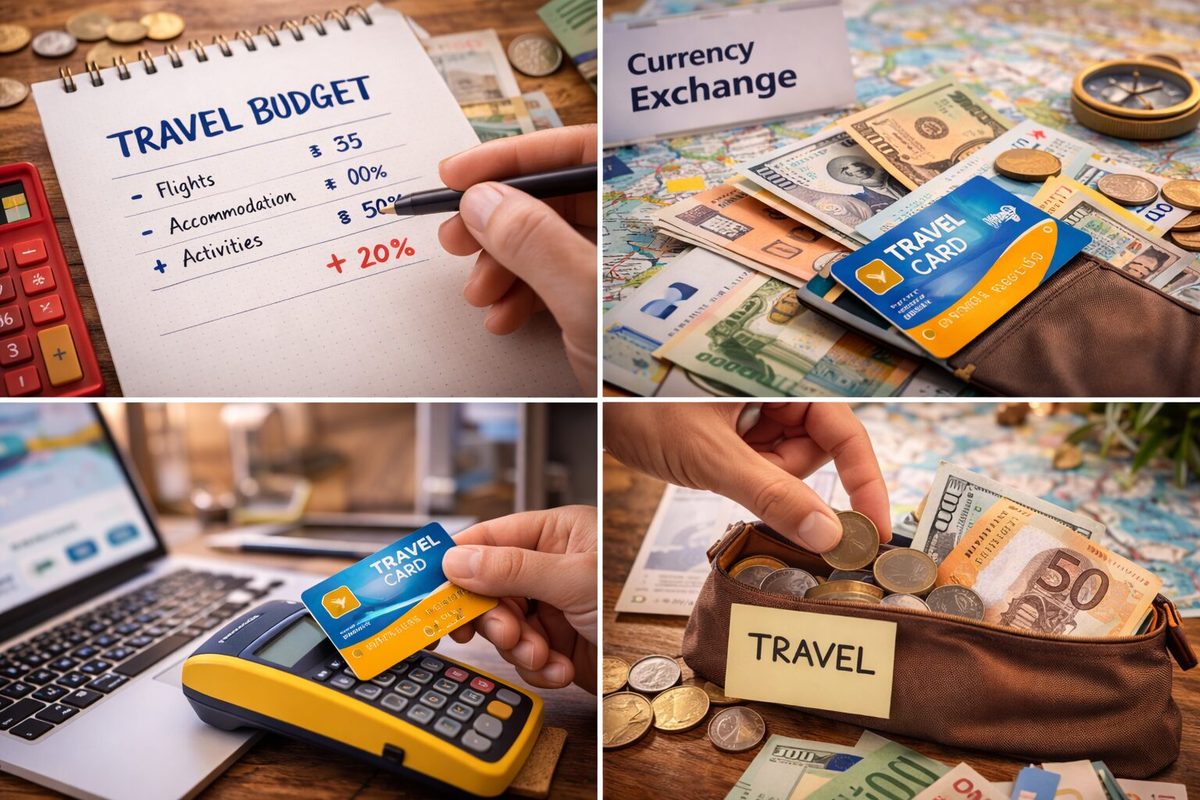
A well-planned travel budget leaves room for unexpected expenses instead of allocating every dollar before departure.
Even carefully planned trips can produce additional costs.
These may include:
- Transport changes
- Unexpected fees
- Currency fluctuations
- Additional meals
- Attraction costs
- Tipping
- Emergency purchases
- Unplanned experiences
A buffer of around 10–20% of the planned trip budget can be a useful starting point, although the appropriate amount depends on destination, trip length, travel style and personal circumstances.
The purpose is not to encourage overspending. It is to prevent a minor unexpected expense from destabilizing your entire trip.
Smart travelers do not try to eliminate every surprise. They prepare financially for reasonable uncertainty.
7. Use Travel-Friendly Banking Systems
Choosing payment and banking options with international use in mind can help reduce avoidable fees and exchange-rate losses.
Many travelers lose money through foreign transaction fees, unfavorable exchange rates and ATM charges without realizing how much these costs add up.
Before traveling internationally, check:
- Foreign transaction fees
- ATM withdrawal fees
- Currency conversion rates
- Daily withdrawal limits
- Card acceptance in your destination
- Whether your bank requires travel notifications
Services such as Wise can also be useful for travelers who need international money-management options.
Do not rely on a single financial service. Before departure, understand how you will access money if your primary card or account becomes temporarily unavailable.
8. Never Depend on a Single Payment Method
A reliable travel payment setup includes a primary method, a separate backup and some accessible local currency where appropriate.
A single card can become a serious problem if it is lost, blocked, damaged or rejected.
A practical setup can include:
- Primary debit or credit card for everyday spending
- Backup card stored separately from your main wallet
- A small amount of local cash for emergencies, transport or businesses that do not accept cards
Cards can be declined unexpectedly, ATMs can malfunction, and mobile payment systems can fail because of network or verification issues.
Keeping your backup payment method physically separate from your primary wallet reduces the risk of losing everything at once.
The objective is simple: if one payment method fails, another can take over without bringing your trip to a halt.
9. Be Careful with Airport Currency Exchange
Airport exchange counters can be convenient, but convenience does not always mean good value.
Travelers arriving in a new country may feel pressured to exchange money immediately, particularly when they need cash for transport or other essentials.
Instead of exchanging a large amount automatically, consider:
- Checking the exchange rate before committing
- Comparing available options
- Using reputable ATMs where appropriate
- Understanding ATM and foreign transaction fees
- Carrying enough local currency for immediate needs
Airport exchange can sometimes be useful for a small emergency amount, but it should not automatically become your main currency strategy.
The goal is to understand the total cost of accessing your money, rather than focusing only on the advertised exchange rate.
10. Maintain Daily Financial Tracking
A quick daily review of your spending can keep a travel budget under control before small expenses become a large problem.
Many travelers only realize that they have overspent once the trip is over.
Daily tracking gives you an opportunity to adjust while you still have time.
You can use:
- A simple note on your phone
- A budgeting application
- A spreadsheet
- Your banking app
- End-of-day spending categories
Track basic categories such as:
- Transport
- Food
- Accommodation
- Attractions
- Shopping
- Miscellaneous expenses
The objective is not to make travel feel restrictive.
It is to maintain awareness so that you can spend intentionally and adjust the following day’s plans when necessary.
Packing & Preparation Mastery
11. Pack Light to Preserve Mobility

Packing light makes it easier to move through airports, stations and cities while keeping your travel plans flexible.
Heavy luggage can create unnecessary friction throughout a journey.
When you carry less, you can:
- Move more easily through airports and stations
- Use public transportation more comfortably
- Reduce baggage-related stress
- Avoid unnecessary checked-bag fees where applicable
- Adapt plans more easily
- Spend less time managing luggage
Packing light does not mean traveling without essentials.
It means being deliberate about what you actually need.
The less you carry, the less you have to manage.
12. Use a Packing Checklist Every Time
A simple packing checklist can turn preparation from a memory test into a repeatable system.
Even experienced travelers forget things when packing from memory, particularly when preparing for different climates or unfamiliar destinations.
A checklist can help you organize:
- Travel documents
- Clothing
- Toiletries
- Electronics
- Medication
- Chargers
- Travel accessories
- Destination-specific items
You can create a reusable digital checklist using tools such as Notion or Google Keep.
Update the checklist whenever you discover something useful or unnecessary during a trip.
Over time, it becomes a personalized travel system.
13. Roll Clothes to Improve Luggage Organization
Rolling suitable clothing can help organize luggage and make better use of available space.
Rolling is not necessarily better for every fabric or garment, but it can be useful for many casual clothes and travel items.
It can help you:
- Organize clothing into sections
- See more of what is inside your bag
- Use gaps between larger items
- Separate outfits or categories
- Make unpacking easier
Packing cubes can also help maintain organization, particularly when you are moving between several destinations.
The broader lesson is more important than the technique itself: organize your luggage so that you can access what you need without unpacking everything.
14. Pack for Versatility, Not Quantity
Choosing clothing and travel items that serve multiple purposes can reduce luggage weight without reducing your options.
Instead of packing a large number of individual outfits, choose pieces that work together in several combinations.
A simple rule is:
Choose items that can work with at least two other pieces whenever practical.
This approach can help you:
- Reduce luggage weight
- Create more outfit combinations
- Avoid single-use clothing
- Adapt to different settings
- Pack for longer trips without significantly increasing luggage
You are not necessarily packing fewer things simply for the sake of it.
You are building a more flexible travel wardrobe.
15. Keep Critical Items in Your Carry-On
Important documents, essential medication, valuable items and critical electronics should remain accessible during air travel.
Your carry-on is your backup if checked luggage is delayed, mishandled or temporarily unavailable.
Important items can include:
- Passport and travel documents
- Visas and entry documents where applicable
- Essential medication
- Phone and charger
- Power bank, subject to airline requirements
- Payment cards
- Important keys
- Travel insurance information
- Other irreplaceable valuables
Airline baggage rules vary, so always check the specific airline’s requirements before packing. IATA notes that baggage rules can vary according to airline, route, fare and other factors, and that spare lithium batteries and lithium-powered devices have specific carriage requirements.
The principle is simple:
If replacing it quickly at your destination would be difficult, keep it accessible rather than putting it in checked luggage.
Travel Experience Optimization
16. Leave Tourist Zones to Discover Real Cities

Exploring beyond the busiest tourist districts can reveal everyday culture, local food and a more authentic sense of place.
Major attractions show you a destination’s highlights, but neighborhoods often reveal its identity.
Local markets, residential streets, cafés, community spaces and everyday transport areas can show how people actually live.
However, leaving tourist areas should not mean abandoning common sense.
Consider:
- Local safety conditions
- Time of day
- Neighborhood reputation
- Local advice
- Your own level of familiarity with the destination
The goal is not to avoid tourist attractions.
It is to balance them with experiences that allow you to understand more of the destination.
17. Treat Food as Cultural Access

Local food can provide a direct connection to a destination’s history, traditions and everyday life.
Food is often treated simply as something to consume between attractions.
Yet cuisine can reveal how a community uses local ingredients, preserves traditions and adapts to its environment.
You can experience this through:
- Street food
- Local restaurants
- Traditional markets
- Food tours
- Cooking experiences
- Regional dishes
You do not have to seek out expensive restaurants to experience meaningful local cuisine.
Sometimes a simple meal in the right setting can tell you more about a destination than a carefully staged tourist attraction.
18. Learn Basic Local Phrases
A few words in the local language can make everyday interactions more respectful, comfortable and human.
You do not need to become fluent before traveling.
Start with useful expressions such as:
- Hello
- Please
- Thank you
- Excuse me
- Goodbye
- Where is…?
- How much is…?
Even when your pronunciation is imperfect, making an effort can signal respect.
Basic language skills can be particularly useful in:
- Markets
- Small shops
- Restaurants
- Public transport
- Local neighborhoods
Language is not simply a communication tool. It is also a way of showing that you are willing to engage with the place you are visiting.
19. Start Early to Experience a Different Side of the City
Early mornings can offer quieter streets, softer light and a chance to experience a destination before the day’s crowds build.
Cities often change character throughout the day.
Early morning can provide:
- Quieter streets
- Better opportunities for photography
- Easier access to popular locations
- A clearer view of local routines
- More comfortable conditions in some destinations
Starting early does not mean waking before sunrise every day.
It simply means recognizing that some experiences are easier, calmer or more rewarding earlier in the day.
A small change in timing can improve the quality of an entire day’s itinerary.
20. Accept That Plans Will Change
A flexible itinerary gives you room to respond to delays, weather, local conditions and unexpected opportunities.
No matter how carefully you plan, travel introduces variables you cannot completely control.
Flights may be delayed. Weather can change. Attractions can close. Transport can become disrupted.
Rigid planning can turn these situations into unnecessary frustration.
A flexible approach allows you to adjust without feeling that the entire trip has failed.
Leave some space between major activities, identify alternatives for important plans and avoid scheduling every minute.
Some of the most memorable travel experiences happen because the original plan changed.
Safety & Smart Travel Systems
21. Consider Travel Insurance an Essential Part of Trip Planning
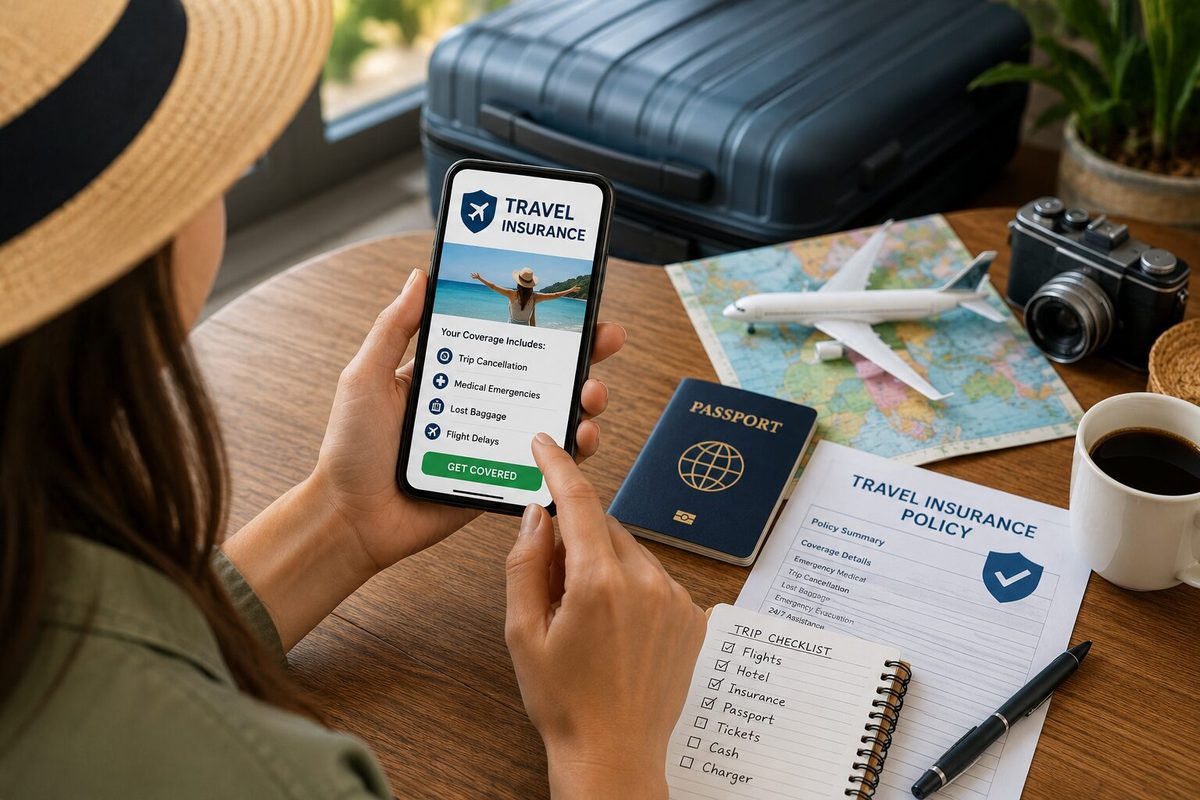
Travel insurance can help protect you from financial consequences associated with unexpected medical, cancellation, interruption or baggage problems.
Unexpected events can happen even when a trip has been carefully planned.
Depending on the policy and destination, travel insurance may provide protection for:
- Emergency medical expenses
- Medical evacuation
- Trip cancellation or interruption
- Lost, delayed or stolen baggage
- Other covered travel disruptions
Coverage varies considerably between policies, so do not choose insurance solely by price.
Check:
- What is covered
- What is excluded
- Coverage limits
- Deductibles
- Medical conditions and eligibility requirements
- Cancellation conditions
- Emergency assistance arrangements
For travelers looking to compare coverage options, you can explore travel insurance options.
Travel insurance does not eliminate risk. It can, however, reduce the financial impact of certain covered events. Official travel guidance also recommends considering travel insurance and reviewing what a policy does and does not cover before departure.
22. Keep Secure Digital Copies of Important Documents
Secure digital backups give you another way to access essential travel information if physical documents are lost, damaged or temporarily unavailable.
Consider securely storing copies of:
- Passport identification page
- Visa or travel authorization
- Flight confirmations
- Accommodation reservations
- Travel insurance documents
- Important emergency contacts
Possible storage options include:
- Secure cloud storage
- Password-protected files
- Encrypted storage applications
- A secure device folder
Do not treat digital copies as replacements for documents that must legally be presented in original form.
Instead, use them as a recovery layer.
For international travel, keeping your documents organized is particularly important because passport, visa and health requirements can vary by destination and itinerary.
23. Download Offline Maps Before You Leave
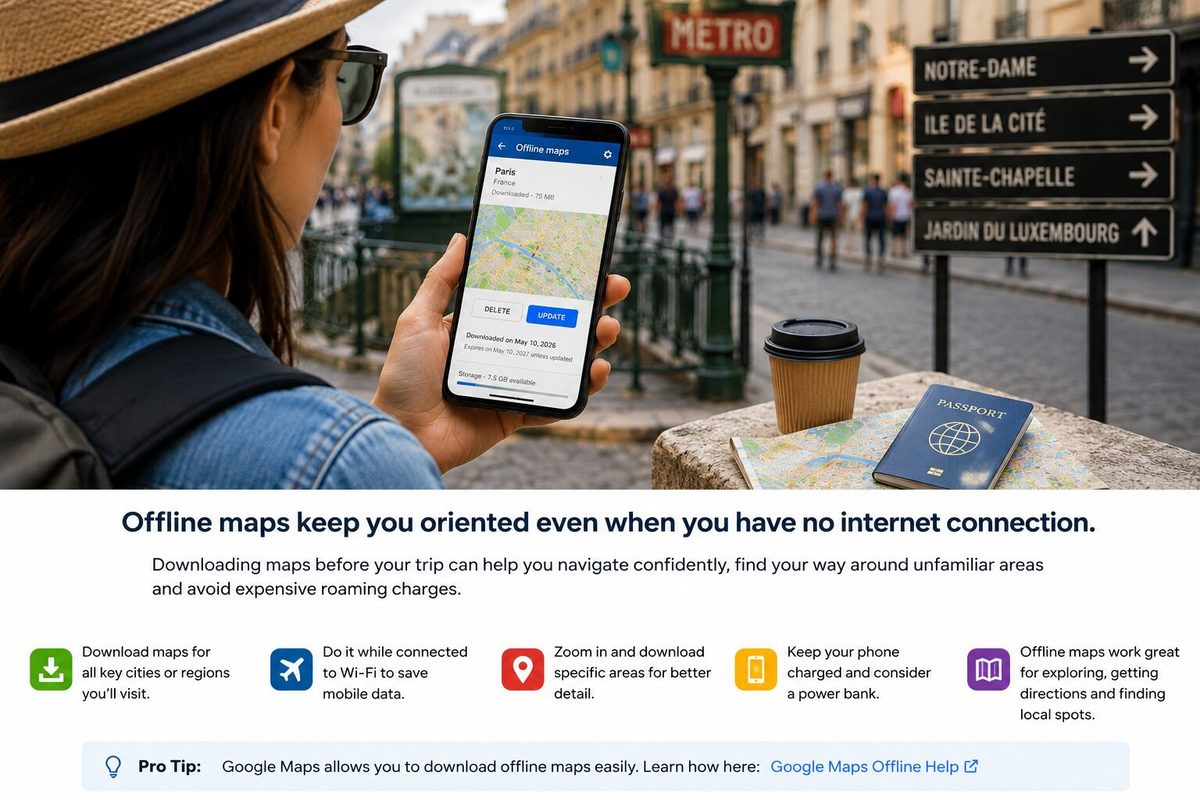
Downloading important maps before departure can keep you oriented when mobile data, Wi-Fi or roaming is unavailable.
Connectivity is not guaranteed everywhere.
You may encounter:
- Poor mobile coverage
- Underground transport
- Roaming limitations
- Network outages
- Expensive data charges
Download maps for important destinations before leaving.
Depending on the application, offline access can help you:
- Locate streets
- Find landmarks
- Check routes
- Navigate unfamiliar areas
- Reduce reliance on mobile data
Google Maps supports offline map downloads, making it possible to prepare important areas before you travel.
Offline maps are especially useful when arriving in a new city and trying to reach your accommodation without immediately relying on a local data connection.
24. Awareness is the Simplest Form of Safety
Staying aware of your surroundings can reduce avoidable problems in crowded streets, markets, public transport and tourist areas.
Most travel risks are not dramatic events.
Many are ordinary situations involving distraction, misplaced belongings, unfamiliar surroundings or poor judgment.
Simple awareness can help you:
- Notice unusual situations earlier
- Keep better control of your belongings
- Avoid unnecessary distractions
- Choose safer routes
- Respond more quickly when circumstances change
Avoid displaying valuables unnecessarily, pay attention when using your phone in crowded areas and remain aware of your surroundings when withdrawing cash or navigating unfamiliar places.
Safety does not require constant fear.
It requires attention.
25. Share Your Travel Plans with Someone You Trust
Sharing basic travel information with a trusted person creates an additional layer of awareness when you are away from home.
This is particularly useful for solo travelers and international journeys.
A shared itinerary can include:
- Flight details and arrival times
- Accommodation information
- General day-by-day plans
- Important contact information
- Travel insurance details
- Expected return date
You do not need to share every movement in real time.
The purpose is simply to ensure that someone you trust knows where you are generally expected to be and how to reach you if necessary.
This adds a layer of preparedness without restricting your independence.
Key Takeaways
- Plan before you book: Research your route, destination and requirements before committing.
- Compare total value: The cheapest headline price is not always the cheapest overall option.
- Use flexibility: Different dates, airports and schedules can create better opportunities.
- Build financial and logistical backups: Prepare for unexpected expenses and disruptions.
- Pack for mobility: Carry what you need without creating unnecessary baggage.
- Experience the destination: Look beyond major attractions and engage with local culture.
- Protect your information: Keep important documents and confirmations securely accessible.
- Stay connected intelligently: Prepare offline resources before you need them.
- Travel with awareness: Good preparation and attention can reduce avoidable problems.
- Leave room for change: A flexible plan is often more useful than a perfect plan.
Best For
- First-time international travelers
- Frequent travelers looking to optimize costs
- Solo travelers prioritizing preparation and safety
- Couples and families planning independent trips
- Budget-conscious travelers
- Travelers seeking smoother and more intentional journeys
Frequently Asked Questions
What are the smartest ways to save money when traveling in 2026?
Compare different travel dates, booking platforms and accommodation options, and remain flexible where possible. Track prices before booking and consider the total cost of the journey rather than focusing only on the lowest advertised fare.
How can I make international travel easier?
Prepare your passport and entry documents early, verify current visa and health requirements, organize your bookings, understand local payment options and prepare for connectivity before departure. Requirements can change, so verify them again close to your trip.
What should I always keep in my carry-on?
Keep essential travel documents, necessary medication, payment cards, important valuables and critical electronics accessible. Always check your airline’s specific baggage and lithium-battery requirements before departure.
How can I stay safe while traveling abroad?
Stay aware of your surroundings, protect your documents and money, use reputable transportation where appropriate, maintain communication, consider suitable travel insurance and share basic itinerary information with someone you trust.
Plan Your Next Journey with AxTravel
Continue exploring curated travel content designed to help you travel smarter, better and more meaningfully.
Explore our travel guides for destination-specific planning
Find useful travel deals to help you save on your journey
Discover unforgettable travel experiences around the world
Read our travel tips for more practical advice
Secure your journey with comprehensive travel insurance cover
Conclusion
Smart travel is not defined by how far you go, but by how well you move through the world.
The best journeys are built through a combination of preparation, flexibility, awareness and good decision-making. From comparing flights and managing your budget to packing efficiently, understanding local culture and protecting your documents, small decisions can have a major effect on the quality of your trip.
This is the essence of smart travel tips: turning uncertainty into preparation, preparation into confidence and confidence into freedom to enjoy the journey.
At AxTravel, we believe that the best journeys are not simply planned. They are thoughtfully designed around the traveler, the destination and the realities of the journey.
Use these 25 principles as a foundation for your travels in 2026, adapt them to your destination and travel style, and give yourself more room to enjoy the experiences that matter most.
✍️Written by the AbmarketX Travel Desk
Helping you explore the world with trusted guides, tips, and inspiration.